The Hidden Cost of Initiative Overload
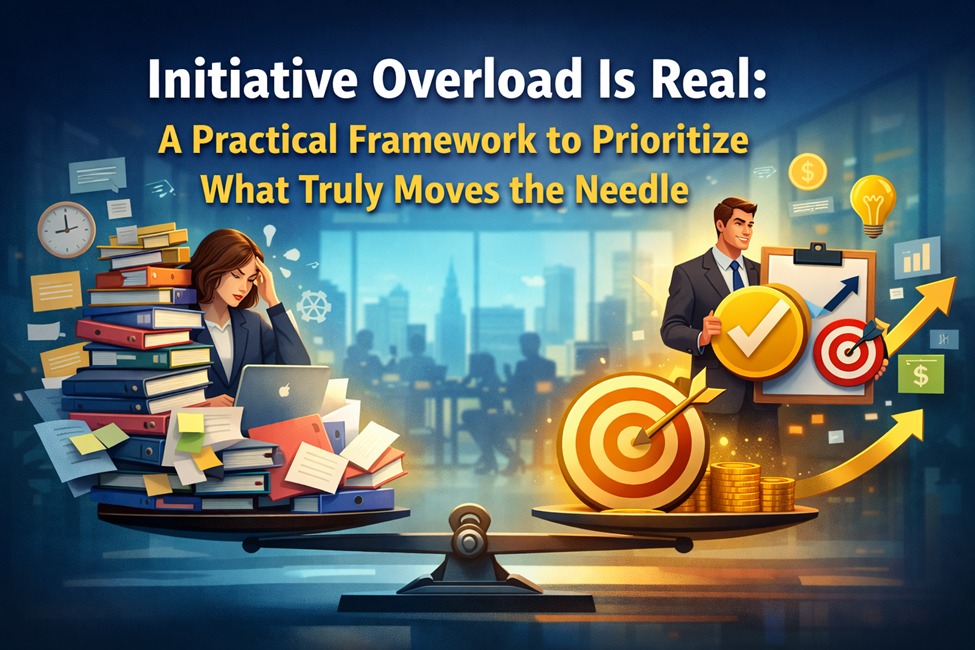
In every organization, the flood of strategic initiatives feels like a natural byproduct of growth and ambition. Leaders and teams are constantly launching new programs, projects, and transformations aimed at driving innovation, efficiency, or revenue. However, what often begins as a well-intentioned push for progress quickly morphs into initiative overload a situation where the sheer volume of initiatives overwhelms teams and leadership. This overload creates a paradox: despite having more initiatives than ever, organizations fail to achieve the outcomes they desire. Teams become bogged down, resources are stretched too thin, and the alignment between strategy and execution weakens as initiatives pile up, often competing for the same resources and attention.
The truth is, initiative overload is real, and its impact is profound. When too many initiatives are launched without clear prioritization or alignment, organizations risk spreading their resources too thin, losing focus, and abandoning high-value efforts in favor of lower-impact ones. Initiatives.app helps organizations avoid these pitfalls by providing real-time visibility and a structured prioritization framework inside Microsoft Teams.
Learn how to take control of initiative overload and prioritize the efforts that truly matter: https://initiatives.app/why-digital-initiatives-fail-real-time-visibility/.
The Paradox of Too Many Initiatives
The paradox of initiative overload is that organizations believe they are doing everything they can to move the needle by launching a multitude of initiatives. However, the opposite is often true. Too many initiatives lead to diluted focus, fragmented execution, and ultimately, inconsistent results. This scattershot approach prevents teams from dedicating the necessary resources and attention to the initiatives that could have the most significant impact. Leaders and PMOs end up firefighting, constantly switching between tasks and struggling to track progress across a sprawling web of disconnected projects.
But here's the harsh reality: despite the flurry of activity, the results of multiple initiatives often fail to add up to the expected impact. Without a structured framework for deciding which initiatives deserve attention, the organization faces a lack of focus and low return on effort. This is where a strategic approach to initiative prioritization becomes critical. By embedding a clear, data-driven framework inside Teams, Initiatives.app ensures that organizations can shift from chaotic execution to disciplined, impactful delivery. Start prioritizing initiatives that truly move the needle with Initiatives.app:
https://initiatives.app/execution-intelligence/
The Cost of Resource Misallocation
When initiatives are not properly prioritized, the biggest casualty is often resource allocation. Resources whether human, financial, or technological are finite. Without a clear view of which initiatives are most important, resources are dispersed across too many fronts. Teams are forced to juggle multiple projects at once, resulting in burnout, disengagement, and reduced productivity. As resources are stretched thin, the initiatives that are supposed to drive growth or transformation lose momentum.
This is where leadership needs to step in and apply a rigorous framework that ensures resources are allocated to the initiatives with the highest potential impact. Initiatives.app helps organizations make smarter resource allocation decisions by bringing clarity and transparency to project status, resource needs, and alignment with business outcomes. Real-time insights allow leaders to direct resources efficiently, ensuring that the highest-value initiatives get the focus they deserve.
Learn more about how resource allocation drives successful initiatives: https://initiatives.app/initiative-governance-best-practices/
Building a Practical Framework for Prioritization
Given the overwhelming number of initiatives most organizations face, leaders need a practical prioritization framework that goes beyond gut feeling or historical precedence. To create this framework, it's essential to consider three primary pillars: strategic alignment, resource availability, and impact potential. These pillars will guide decision-making and help ensure that only the initiatives with the highest business value are pushed forward.
Strategic Alignment: This pillar ensures that the initiatives align with the company’s overall strategic objectives. Initiatives that do not contribute to key business goals should be deprioritized or restructured.
Resource Availability: The reality of resource constraints must be factored in. Every initiative must be evaluated against the availability of financial, human, and technological resources.
Impact Potential: This pillar considers the expected return on investment, whether it’s in terms of revenue growth, cost savings, operational efficiency, or market differentiation.
By combining these pillars into a unified framework, organizations can create a transparent system for prioritizing initiatives and ensuring that resources are directed to efforts that truly move the needle. With Initiatives.app, this framework can be embedded directly inside Microsoft Teams, providing ongoing visibility and governance without adding complexity.
Ready to build your prioritization framework? Start here: https://initiatives.app/why-prioritize-initiatives/
How Prioritization Transforms Execution
A key factor in executing initiatives successfully is alignment between leadership and teams on which initiatives are top priority. When teams understand the “why” behind the prioritization, they become more committed to delivering results and feel a greater sense of ownership over their contributions. Initiatives.app enables this alignment by tracking every initiative’s strategic importance, providing real-time progress updates, and surfacing risks and dependencies early. By embedding these insights inside Teams, the platform ensures that execution remains focused and disciplined. Leaders can monitor which initiatives are on track, identify potential bottlenecks, and make real-time adjustments as needed. This continuous alignment empowers teams to remain on course and achieve the outcomes that truly matter.
Learn how continuous alignment boosts execution: https://initiatives.app/initiative-alignment/
Reducing Initiative Overload with Real-Time Visibility
The biggest challenge in tackling initiative overload is the lack of visibility. With so many initiatives running at once, it becomes nearly impossible for leadership to keep track of everything that is happening. Initiatives.app solves this problem by embedding real-time visibility into every initiative’s progress, risk status, dependencies, and resource usage directly inside Microsoft Teams. This transparency allows leaders to quickly identify which initiatives are at risk of failing, which ones are exceeding expectations, and where resources need to be reallocated.
Real-time visibility ensures that initiative overload does not lead to chaotic execution or burnout. By creating an environment where teams and leaders can see the health of every initiative, organizations can manage multiple projects without sacrificing quality or focus.
Start monitoring your initiatives in real time with Initiatives.app: https://initiatives.app/execution-visibility/
The Role of Data in Prioritization
Data plays a crucial role in determining which initiatives should be prioritized. Many organizations still rely on subjective decision-making, often driven by individual perspectives or legacy priorities. However, the use of real-time data—such as performance metrics, resource utilization, market trends, and risk assessments—provides an objective foundation for prioritization. Initiatives.app integrates data-driven insights into its framework, allowing organizations to make prioritization decisions based on solid evidence rather than guesswork. This data-driven approach ensures that initiatives are not only aligned with strategic goals but are also backed by the most relevant, up-to-date information.
Ready to unlock the power of data for prioritization?
Learn more here: https://initiatives.app/data-driven-prioritization/
Streamlining Initiative Execution with Microsoft Teams and Initiatives.app
The goal of any prioritization framework is to ensure that high-value initiatives get the focus they deserve. But prioritization alone is not enough; organizations must have the right tools to execute those initiatives efficiently. Microsoft Teams, with Initiatives.app embedded, provides a perfect solution by offering a single, unified platform for collaboration, progress tracking, risk management, and decision-making. Teams becomes a strategic execution hub, where initiatives are continuously tracked, resources are allocated efficiently, and governance is embedded into daily workflows. This integrated system keeps execution on track, ensuring that teams work toward the same high-priority goals and leaders have the data they need to make informed decisions.
To maximize the success of your initiatives, it's critical to integrate your prioritization framework with execution.
Learn how Initiatives.app makes this possible inside Teams: https://initiatives.app/teams-as-execution-hub/
👉 Book a Demo | 🌐 Visit Initiatives.app
📥 Learn more about features, benefits, and use cases at:
👉 www.initiatives.app
Contact Us : info@whizible.com | +91 855-498-3315
Address : Mrugank, Level 3, Kothrud, Pune, Maharashtra, 411038